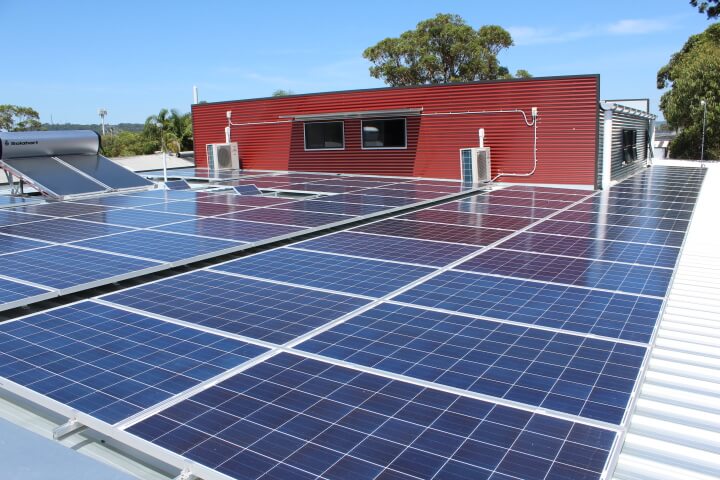
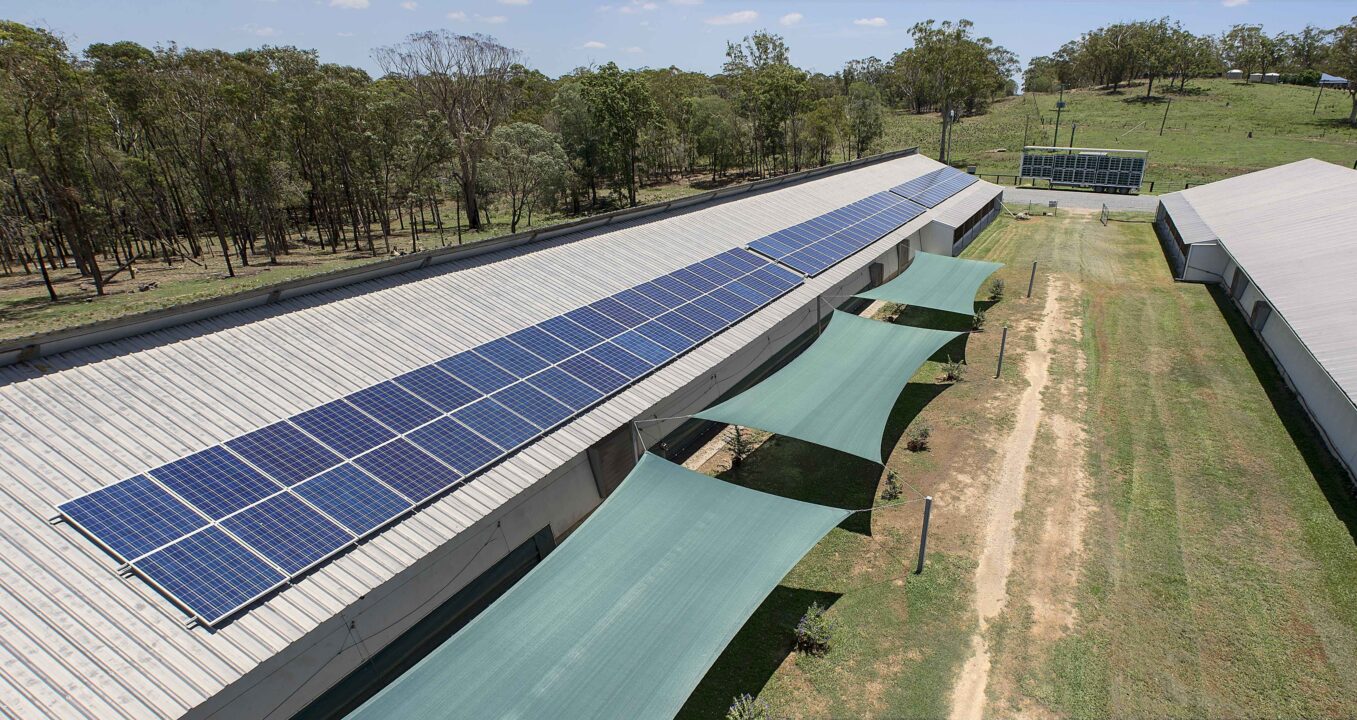
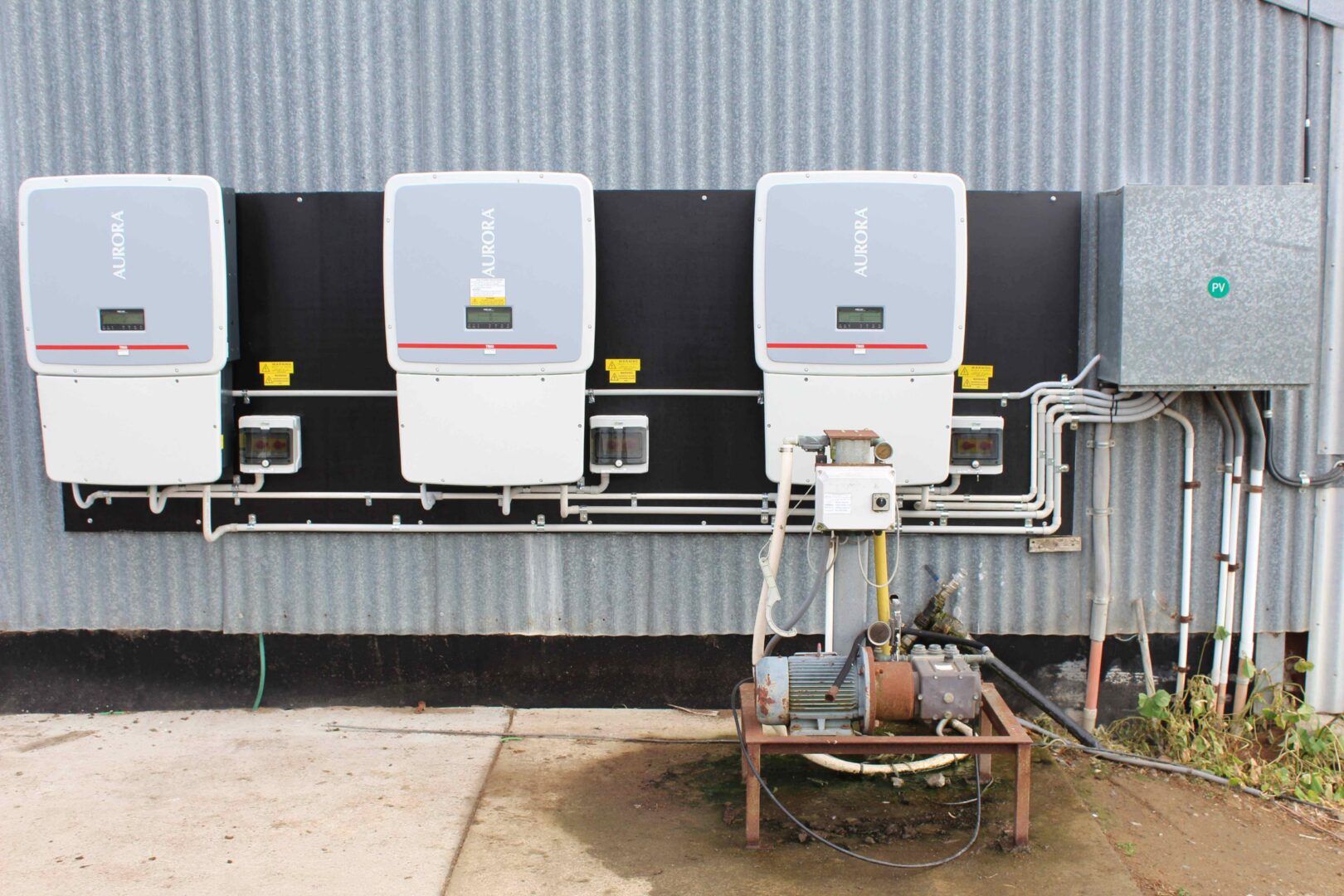
Pictures are of systems I helped install. Above, Byron Bay, below a commercial chicken farm in Brisbane surrounds.
Background
Prior to studying Electrical Engineering in New Zealand, I live in Brisbane Australia and was working as an Electrical Apprentice. This role had me working in primarily domestic installations but I also had the opportunity to work on commercial and industrial systems.
Variety of work
Domestic jobs were generally straight forward, they often consisted of;
– Getting onto the roof and measuring out the space, ensuring that the solar panels could be installed.
– Cutting rails and installing brackets. Tiles were tricky as they needed to be kicked up, shaved and pulled down using a specialist tool my dad made for me.
– Installing cable runs, DC panels required an isolation switch on the roof and conduit runs from the switch to the inverter.
– Switch boards often required modification due to the addition of the new inverter circuit breaker. This modification meant that the board had to be brought up to standard and because of this, almost every switch board required a main fuse to be installed
– Installing and running cable tray in industrial settings.
– Calculating voltage drops for long cable runs and knowing when to size up the conductor size.
– Occasional switch board work.
– Training at a registered training facility twice a year.
The training I received at the training facility was what inspired me to study Electrical Engineering. It’s here that I found that I was already studying topics that were taught in second year university such as power factor and the difference between real power and imaginary power.
Challenges
Whilst commercial and industrial jobs had a very similar installation procedure, they also had some of the most dynamic installations and challenges.
– Technical challenges such as long distances from metering switch board from inverters. The farm installation required radios and repeaters so that control equipment at the switchboard could communicate with the inverters elsewhere on the farm.
– Thick cables, having to pull copper cable where the conductor was as thick as my thumb through a buried conduit bend had me sweating. We all think of cables as being fairly flexible but at such thicknesses the cable required a lot of effort to pull through the bend.
– Working at heights. Roofs are a potentially dangerous work space. These risks can be mitigated with proper technique such as avoiding areas under constant shade as slippery algae can grow yet not be visible. Additionally, if the surface is lacking grip, or the roof is too steep safety harnesses can be used. They also have a set of risks such as trip hazards and the potential for harm if one does fall off a roof, instead of being able to catch your fall you may incur more harm as you swing into the side of the building.
The generalist resume covers a broad range of topics but doesn’t detail a particular field or my comprehensive skill set as it may not be relevant to the listing.
The Mechanical resume details my ability to work with CAD software in a variety of settings, as well as covering my skills with tools and in manufacturing.