Roles & Responsibilities
During my time at OnFarm Data I had to perform a variety of roles, one being field servicing for a variety of products.
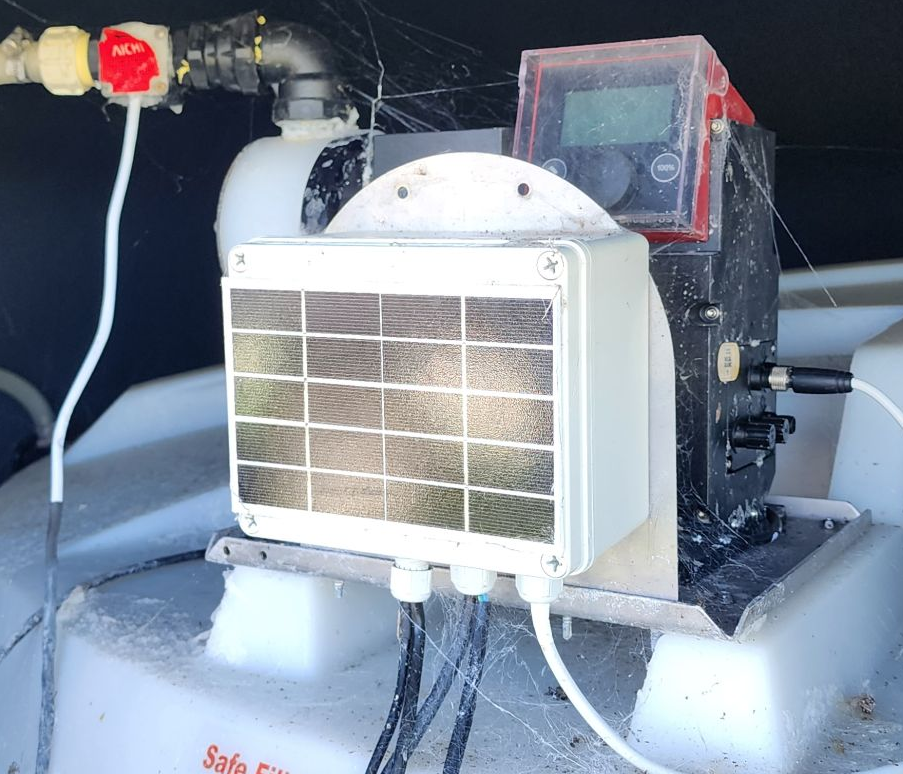
• Servicing and install of data loggers and control which required PCB upgrades, or needed GPS, 4G, or LoRa connection troubleshooting.
• Troubleshooting sensor failures such as weather stations which were no longer recording pulses. Sometimes this would be due to a cow ripping the cable out and solving the problem with better cable routing and protection.
• Servicing and install of post irrigation control units. These were LoRa based and could sometimes be fixed without replacing the entire unit.
• Servicing, adjusting, and troubleshooting base stations which bridged large LoRa networks to the cloud.
Process Improvement
Sometimes servicing was a constant back and forth between people in the office, and people on site. Using a Raspberry Pi I was able to create a package that would act as a reference unit, being able to simulate a base which acted as the central unit in a star based LoRa mesh. This had several advantages.
• SD card swapping allowed for the same software to be transported to a different physical unit quickly and efficiently. This meant you could quickly test if it was a hardware problem, or if the location was an issue.
• SSH based LoRa sniffing. This allowed the engineers at the office to have an additional source of truth when trying to diagnose issues. If one unit saw an incoming message whilst another didn’t you can at least confirm that a unit had missed the message. All of this could be done via SSH reducing the need to verbally communicate over the phone.
Creating Service Flow Charts
Whilst I was given minimal training for servicing a LoRa based product in a large scale network, I managed to find out what the most common problems were and what was the potential on-site solution. Using this information I have gathered, I was able to make a simple flow chart which could be agreed on between me and the senior engineers for what the potential problems could be. Navigating the flow chart allowed us to better communicate what trouble shooting steps had been undertaken and allowed this information to be used as training documentation for future employees.
